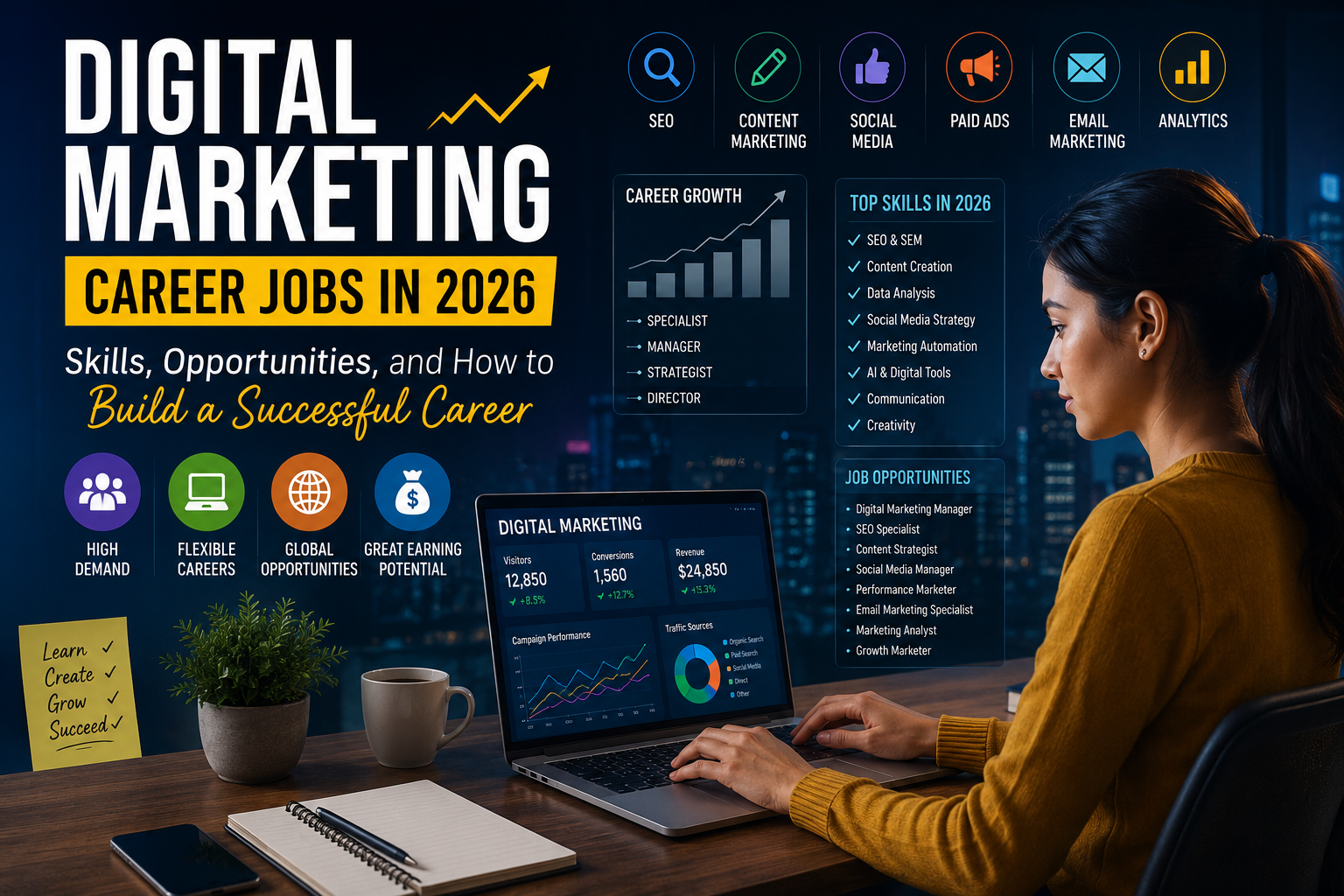
Digital marketing has developed into one of the most exciting career fields in 2026. Businesses no longer rely only on television, newspapers, or billboards to reach customers. Instead, they invest in websites, search engines, social media, email campaigns, online advertising, and digital content to connect with people where they spend most of their time—online.
This shift has created a growing demand for professionals who understand how digital platforms work and how they can help businesses achieve their goals. Whether it is a small local business trying to attract nearby customers or a global company expanding into new markets, digital marketing plays an important role in business growth.
One of the reasons many people choose this field is its flexibility. You can work for a company, join a marketing agency, become a freelancer, or even build your own digital marketing business. As technology continues to evolve, the need for skilled marketers remains strong, making digital marketing a career with long-term potential.
Why Digital Marketing Continues to Grow
The internet has changed the way customers discover products and services. Before making a purchase, many people compare prices, read reviews, watch videos, and search for information online. Because of this, businesses must maintain an active digital presence if they want to remain competitive.
Modern marketing also allows companies to measure results more accurately than many traditional advertising methods. Businesses can see how many people visited their website, clicked an advertisement, completed a purchase, or subscribed to a newsletter. These insights help companies improve their marketing strategies and spend their budgets more effectively.
The growing use of artificial intelligence, automation tools, and data analysis has also changed how marketing teams work. Instead of replacing professionals, these technologies help marketers complete routine tasks more efficiently, allowing them to spend more time on planning, creativity, and customer engagement.
Popular Digital Marketing Careers in 2026
SEO Specialist
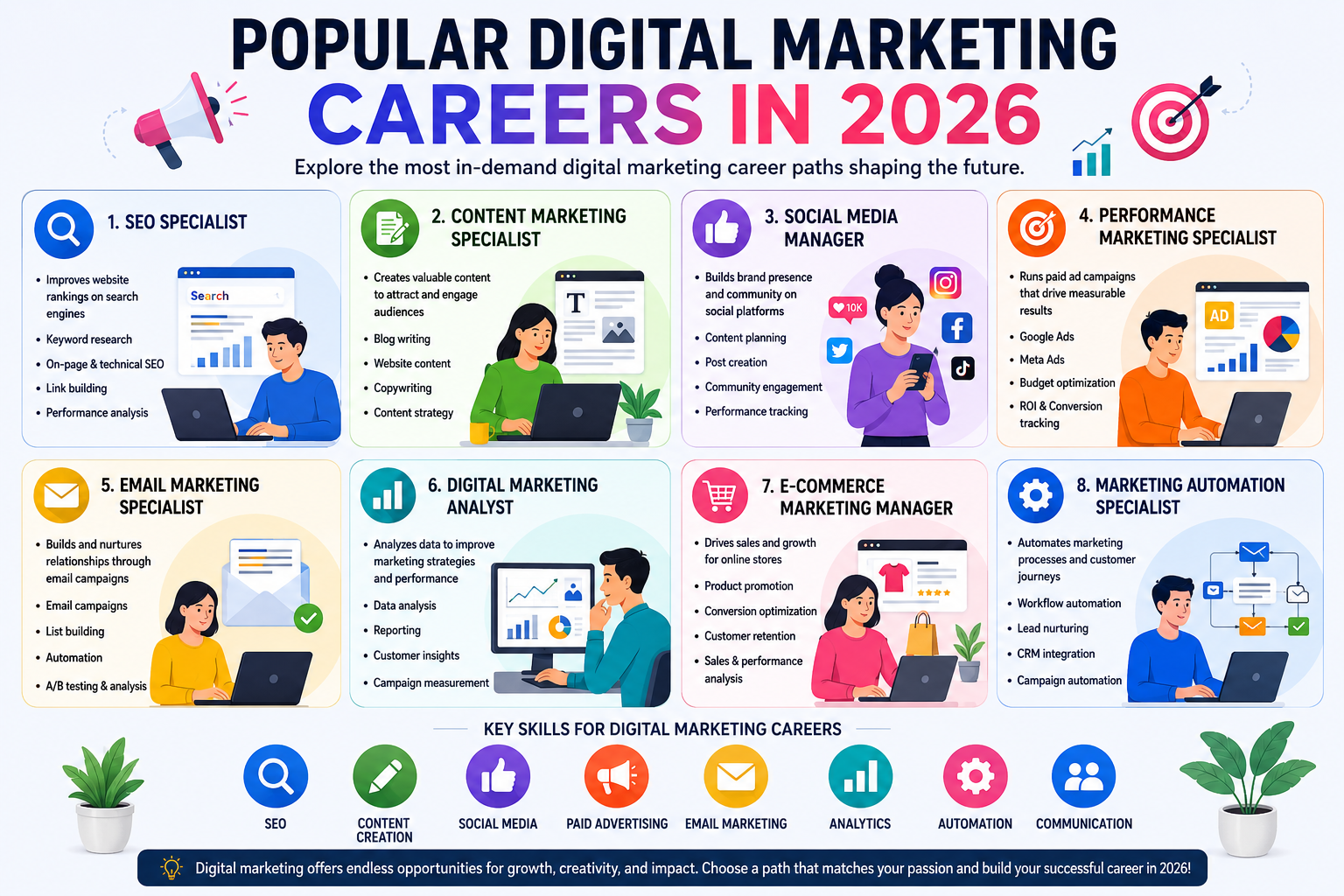
Search Engine Optimization (SEO) specialists help websites become easier to find through search engines. Their work includes researching search topics, improving website performance, organizing content, and identifying opportunities to attract more organic visitors.
As search technology continues to evolve, SEO professionals are expected to understand user intent, website quality, and content relevance rather than simply focusing on keywords.
Content Marketing Specialist
Content remains one of the strongest ways for businesses to educate customers and build trust. Content marketing specialists create blog posts, website pages, product descriptions, email newsletters, guides, and other resources that answer customer questions and support business goals.
Successful content marketers combine research, creativity, and clear communication to produce information that is useful, accurate, and engaging
Social Media Manager
Social media managers help businesses build relationships with their audiences across different platforms. Their responsibilities include planning content, publishing posts, interacting with followers, monitoring audience engagement, and analyzing campaign performance.
In 2026, businesses are placing greater importance on authentic communication and community building rather than simply increasing follower numbers.
Performance Marketing Specialist
Performance marketers manage online advertising campaigns that are designed to produce measurable business outcomes. They monitor campaign data, adjust budgets, test different advertisements, and improve conversion rates to achieve better results.
This role is ideal for professionals who enjoy working with numbers, analysing performance, and making data-driven decisions.
Email Marketing Specialist
Email marketing is one of the most reliable ways to maintain relationship with customer. Specialists create personalized email campaigns, manage subscriber lists, automate communication, and evaluate campaign performance to improve customer engagement and retention.
Digital Marketing Analyst
Digital marketing analysts focus on understanding data. They examine website traffic, customer behaviour, advertising performance, and conversion trends to help businesses make informed decisions. Their insights allow marketing teams to identify successful strategies and areas that need improvement.
E-commerce Marketing Manager
The continued growth of online shopping has increased the demand for marketers who understand customer buying behaviour. E-commerce marketing managers develop promotional campaigns, improve product visibility, optimise shopping experiences, and support long-term customer loyalty.
Skills That Employers Value
Employers look for candidates who combine technical knowledge with practical problem-solving abilities. Understanding SEO, paid advertising, content marketing, social media, analytics, and email marketing provides a strong foundation for most digital marketing careers.
Communication is equally important. Marketers must explain ideas clearly, understand customer needs, collaborate with teams, and create messages that connect with different audiences.
Creativity also remains valuable because businesses need original campaigns that stand out in a competitive digital environment. At the same time, marketers should be comfortable working with data to measure campaign performance and identify opportunities for improvement.
How Artificial Intelligence Supports Digital Marketers
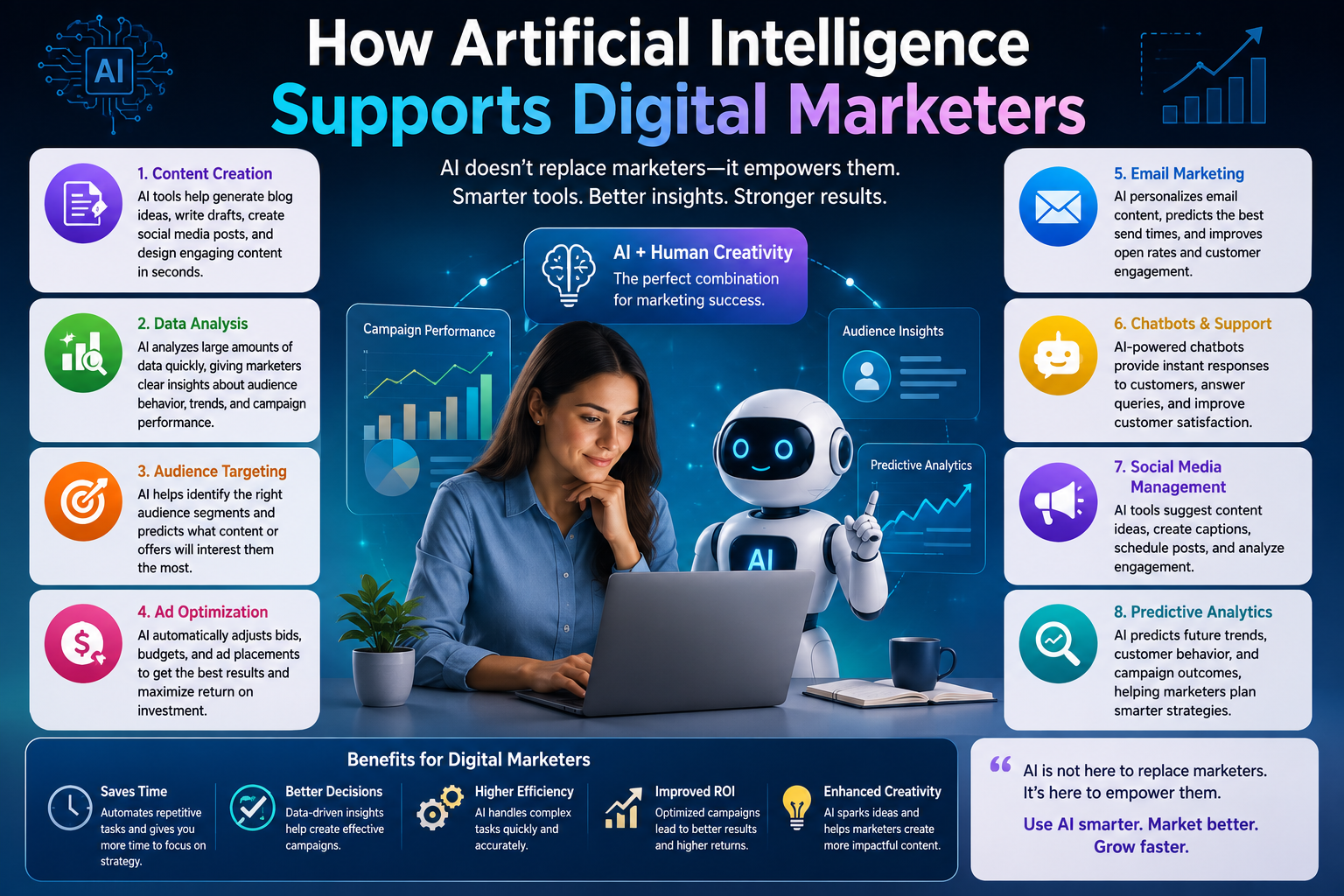
Artificial intelligence has become an everyday tool in digital marketing. Many professionals use AI to organise research, generate content ideas, analyse customer behaviour, improve advertising performance, and automate repetitive workflows.
Although AI increases efficiency, successful marketing still depends on human judgement. Understanding customer emotions, developing creative campaigns, solving unexpected problems, and making strategic business decisions require skills that technology alone cannot replace.
Learning how to work alongside AI has become more valuable than trying to compete with it.
Industries Offering Digital Marketing Careers
One of the advantages of digital marketing is that almost every industry needs it. Retail businesses use it to increase online sales, educational institutions promote courses through digital channels, healthcare organisations share trusted information, and technology companies use digital campaigns to reach new customers.
Hospitality, tourism, finance, real estate, manufacturing, entertainment, and professional services also employ digital marketing professionals. This variety allows individuals to choose industries that match their personal interests and career ambitions.
How to Begin Your Digital Marketing Career
Starting a career does not require years of experience. Many professionals begin by learning the fundamentals through online courses, practical projects, and internships.
Creating your own website or blog is an excellent way to practise writing, SEO, analytics, and content marketing. Personal projects provide practical experience and demonstrate your skills to future employers.
Building a portfolio is equally important. Instead of listing only certificates, include examples of your work, campaign results, content samples, or websites you have improved. Employers often value practical evidence of your abilities.
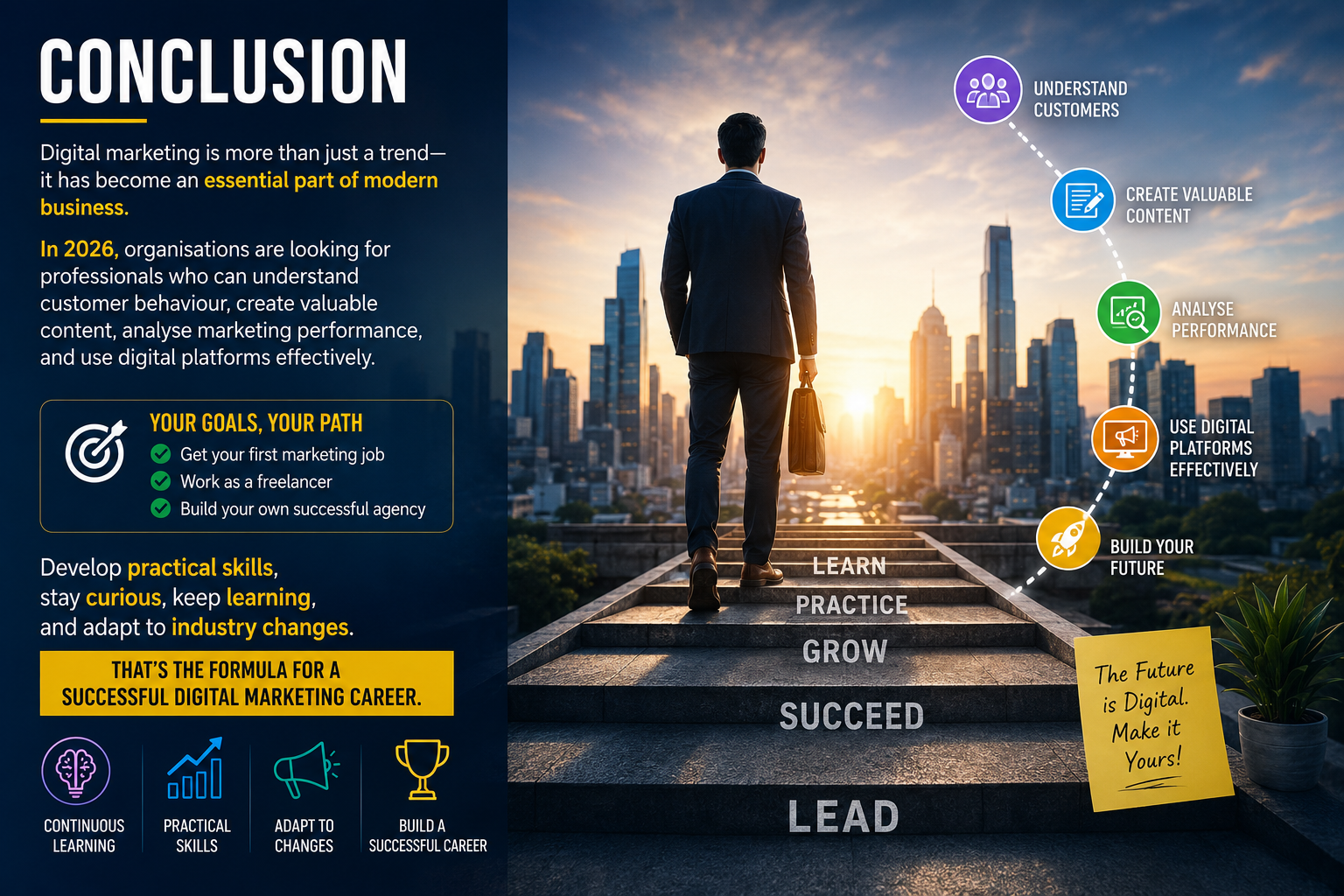
Keeping up with industry developments is another important habit. Search engines, advertising platforms, and social media networks regularly introduce new features, so continuous learning is essential for long-term success.
Career Growth and Future Opportunities
Digital marketing offers multiple career paths. Many professionals begin in entry-level positions before specialising in SEO, paid advertising, content strategy, analytics, or social media management. Others progress into leadership roles such as Digital Marketing Manager, Growth Marketing Manager, or Head of Marketing.
Freelancing has also become a popular option. Businesses increasingly hire independent professionals for specific projects, creating opportunities to work with clients across different industries and countries.
As businesses continue investing in digital transformation, professionals who combine creativity, analytical thinking, adaptability, and ethical marketing practices are likely to remain in demand.